- cross-posted to:
- world@lemmy.world

- cross-posted to:
- world@lemmy.world
Google has criticized the European Union’s intentions to achieve digital sovereignty through open-source software. The company warned that Brussels’ policies aimed at reducing dependence on American tech companies could harm competitiveness. According to Google, the idea of replacing current tools with open-source programs would not contribute to economic growth.
Kent Walker, Google’s president of global affairs and chief legal officer, warned of a competitive paradox that Europe is facing. According to the Financial Times, he said that creating regulatory barriers would be harmful in a context of rapid technological advancement. His remarks came just days after the European Commission concluded a public consultation assessing the transition to open-source software.
Google’s chief legal officer clarified that he is not opposed to digital sovereignty, but recommended making use of the “best technologies in the world.” Walker suggested that American companies could collaborate with European firms to implement measures ensuring data protection. Local management or servers located in Europe to store information are among the options.
The EU is preparing a technological sovereignty package aimed at eliminating dependence on third-party software, such as Google’s. After reviewing proposals, it concluded that reliance on external suppliers for critical infrastructure entails economic risks and creates vulnerabilities. The strategy focuses not only on regulation but also on adopting open-source software to achieve digital sovereignty.
According to Google, this change would represent a problem for users. Walker argues that the market moves faster than legislation and warns that regulatory friction will only leave European consumers and businesses behind in what he calls “the most competitive technological transition we have ever seen.” As it did with the DMA and other laws, Google is playing on fear. Kent Walker suggested that this initiative would stifle innovation and deny people access to the “best digital tools.”
The promotion of open-source software aims to break dependence on foreign suppliers, especially during a period of instability caused by the Trump administration. The European Union has highlighted the risks of continuing under this system and proposes that public institutions should have full control over their own technology.
According to a study on the impact of open-source software, the European Commission found that it contributes between €65 billion and €95 billion annually to the European Union’s GDP. The executive body estimates that a 10% increase in contributions to open-source software would generate an additional €100 billion in growth for the bloc’s economy.
You must log in or # to comment.
Drug dealer critizises addict’s intention to get clean.
It means we’re doing something right.
European administration offices don’t need the best technologies in the world, they just need a freakin office program they can trust…
Fuck Google
Fuck Alphabet, forever
bad for competition? If people want FOSS software, well go make a good product then!
Google has forgotten how to do competition.
it stated that the creation of regulatory barriers would be harmful in a context of rapid technological advancement.
“RaPiD tEcHnOlOgIcAl AdVaNcEmEnT”, we all know what that is.
FCK Fascist-Alphabet
suggested that this initiative would stifle innovation and deny people access to the “best digital tools.”
While I read this section, my google-home powered radio stopped for no reason (just like it does often these days). I opened my home assistant control pannel and launched it again from there.
I’m looking forward to the day I finish my transition to 100% home assistant!
According to Google, the idea of replacing current tools with open-source programs would not contribute to economic growth.
Is Google seriously arguing that the money these nations save can’t be added to their GDPs?
That’s what it sounds like. Or am I confused?Google meant THEIR economic growth.
Don’t worry, Google is trying to confuse you
To an enormous extent are todays data centers, cloud providers, and all the techology the whole world use today based on open source. Without linux, curl, ffmpeg, and so on nothing in todays high tech society would work. Google, as it is today, would not exist if it was for all the open source they leech of.
Well Google contributes a lot to open source, but I get your point.
They mostly do that because they want control and maybe slowly reach their tentacles into projects. Like Chromium and Android are in theory open source, but in practice both are locked down by google and used for their business and mass data harvesting and advertising empire.
Chrome comes from Safari that comes from KHTML, the original KDE web browser. No open source means no Chrome.
Nah, I think they’re saying that their corporate offerings and jobs in a given country would not contribute to GDP, while failing to address that developers and engineers would still be necessary to implement these open source applications, though Google won’t get to siphon money out of those economies. It’s purposely convoluted, basically Google throwing a temper tantrum.
Nah that’s it. Their logic is seemingly if you don’t give the money to Google it’s not contributing to economic growth.
Two economists are walking down the street and pass by a pile of dog shit. One of them (a sadist) turns to the other and says “I’ll pay you $1000 if you eat that dog shit”.
The other performs an internal utility calculation and eats the dog shit.
Continuing their walk, the second economist sees another pile of dog shit and makes the same offer to the first. The first economist also agrees, and eats the dog shit. They walk on.
After a while the second economist says to the first “I can’t help thinking we’re worse off than when we started this walk. We both have the same amount of money we started with, but we both had to eat shit.”
The first economist replies “Worse off?! We’ve just engaged in 2000 dollars worth of trade!”.
Look, by certain ways of calculating GDP growth and trade, it’s probably true that if the money isn’t being spent on software licenses and so on, it means there’s less economic activity going on.
The whole point of open source / free software is that you’re not locked into someone’s proprietary software ecosystem. You don’t have to continue paying license fees. So, if the governments simply stop paying for software licenses, it’s probably true that their GDP will technically shrink. But, that assumes the money won’t be spent on something more useful.
They are saying FOSS isnt companies, google’s value is tied to GDP in some EU countries. If they see less growth so does the GDP.
Yanks are whores who only think of money and kids.
The last line needs a bender meme.
they meant google’s economic growth.
‘Open source means we make no money’
No i think the comment is less direct than that.
For much of government, the underlying objective is to contribute to GDP. For example, funding healthcare means a healthier population who can be more productive.
So by saying “this policy won’t contribute to GDP” its a very general way to say this is not what’s best for your population.
At least I think thats what theyre saying.
As an aside, savings dont directly improve GDP, by definition.
Perhaps they understand economic growth the same way the orange rapist understands tariffs?
Killing parasitic and monopolistic gatekeepers and middlemen is very much contributing to any country’s economic growth.
When corporations or conservatives talk about “the economy”, simply replace it with “rich people’s bank accounts” and it makes sense again.
They are trying to gaslight you into still believing in the trickle-down-theory, against decades of evidence.
And all mainstream media as well as centrist parties (including the US Democrats) join in.I think he’s arguing that not using the most advanced technologies (eg. what Google and Microsoft offer) would be detrimental to worker productivity in the EU.
Of course, in reality, if all those countries start investing in FOSS, they could easily replace the Office suit, SharePoint, the Power platform, etc. I know several programmers who’d gladly devote their time to FOSS full-time if they could. I’ve even met one who simply refuses to work to create anything proprietary.
They are suggesting that going to open source solutions won’t result in new industry in their countries (i.e. that Google won’t be opening offices and data centers and such there).
It’s a pretty bogus statement anyways, but it’s not COMPLETELY senseless.
The company warned that Brussels’ policies aimed at reducing dependence on American tech companies could harm competitiveness.
Just what I’d expect a monopoly to say.
Fuck you. Alphabet.
Increased competition from open source alternatives harms competitiveness? By forcing them to compete and maybe actually innovate?
They mean it would harm their competitiveness.
As in, “We’d be less competitive if you switch to a competitor” (in this case FOSS).


I’ve reached the point in my life where I find this more arousing than booba
But not vagne?
But also:
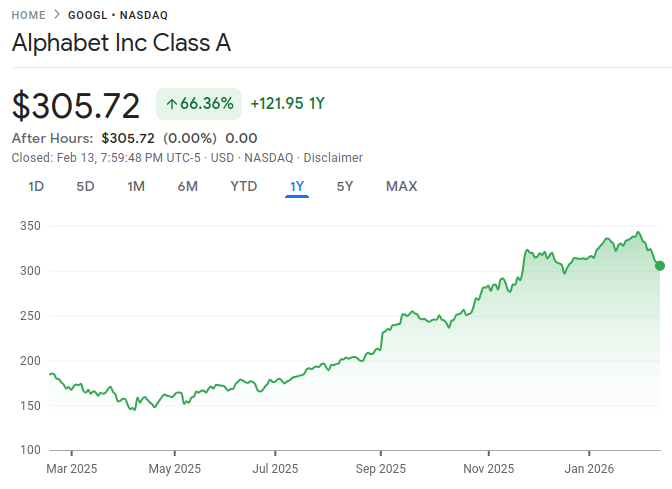
Google is still up 100% from where it was may last year, even taking that drop into account.
maybe Google, but Microslop and Amazon;


Ohh, beautiful!
Maybe we should short the shit out of these arseholes as they go down.
“well yes you actually need to stay dependent on us to be competitive” -fucking ridiculous
When companies like Google, Microsoft, etc. are starting to squirm and whimper. You know you are on the right path. So I take this as a sign that the EU is heading in the right direction.
That’s my take as well
Of course Google hates open-source. They can’t compete with it. Same shit with Microsoft: people are just afraid of trying Linux, but those who do, rarely look back at Windows.
If I could get all my games to work on Linux, I’d nuke my dual-boot in a second. But I’m 99% linux at least.
(And yeah, I’ve tried the compatibility tools.)
Out of interest, when’s the last time you tried? So many games now seem to have Linux compatibility because of Valve’s push for the Steam Deck (and Machine). I’m in the same boat as you though, still haven’t taken the plunge.
The last barrier, anti-cheats.
*the companies that refuse to use Linux compatible anti-cheats
or make their anti-cheats linux compatible :)
The kinda sad part is that a lot of people say “just don’t play those games then”, I play Valorant and PUBG with friends and I can’t force them to find us something else to play just because I want to switch to Linux.
which is basically spyware anyway. I prefer to not play those games entirely.
I blew away my Windows install in favour of Fedora about a year ago. There are only two games in my entire library that don’t work - Call of Duty and Battlefield, both of them because of anti-cheat fuckery. The other 300+ that I’ve tried playing have just worked. Basically tinkering required.
Times have really changed. The life hack you should know is to use ProtonPlus to install Proton-GE which is a customised version that has a bunch of fixes for different games. You just set Steam to use this one over Valve’s default version for all games and you’re pretty much done. They’ve integrated tweaks and fixes for thousands of games, on a per-game basis, so if you’re using this build of Proton then you have nothing else to do. No fiddling, no command line monkeying, just launch and play, same as Windows.
It’s honestly very impressive these days.
Maybe the answer is having a PC only for those games. As a console. Like some people bought the N64 just to play Zelda and nothing else.
Walks silently past in Switch OLED and BotW
It seems I’m older😁
Probably not, I just started this Zelda thing very late.
For a ball park idea, I was about 8 when the first Ataris hit the scene
Then you are a little older than me 🤷 But not much.
I never worked for Google, so I can’t say for sure, but I have this weird suspicion that they use a shitload of open source software, and I’m not just talking about their Android OS or Chromebooks, but for their most core businesses.
It wouldn’t be odd to think that Google might not exist except for their being able to use the open-source software that people had made before they founded their company.
The alternative is that they were complete idiots who paid for all sorts of retail software.
Of course Google hates open-source. They can’t compete with it.
Again, it’s just my supposition, but I’d bet that they can’t compete without it, either.
For any major tech company, apart from ones that are absolutely dedicated to proprietary software starting from firmware up through the OS and on to applications, like Microsoft and Apple, it’s going to be deeply hypocritical to hate open-source.
I have this weird suspicion that they use a shitload of open source software, and I’m not just talking about their Android OS or Chromebooks, but for their most core businesses.
“Open source for me, but not for thee.”
That’s also why they bait-and-switched us with AOSP.
It’s the “pull the ladder” mentality.
They can’t compete with it.
I meant “They can’t compete against it.” Interlanguage translation nuances :)
You were using the phrase correctly. “They can’t compete with it,” is the standard way of saying what you intended to say.
I was playing off of the normal meaning of your statement to make a turn of phrase. In other words, I am intentionally using weird phrasing, and placing it next to your normal phrasing for humor and impact.
Now don’t you come here and be intellectual, you… Intellectual!
The problem with linux is the rough edges. It’s SLOWLY getting better.
2026 linux I find to be BARELY usable as a daily driver.
2006 linux was just trash.
In both cases, power users may have a different experience.
I tried installing a program called “hardinfo”. My ZorinOS software store didn’t find it through flathub.
So I googled it, found a .deb file, which my Zorin store loaded up to install.
Then I hit install, and it spits out a message like “Software was not installed. Requires these three dependancies, which will not be installed”.
Didn’t tell me why they didn’t install. Just said “Hardinfo needs these programs. Good luck figuring it out asshole!”
Ok, it may not have said it in those EXACT words…but you get the idea.
That being said, I recently booted up my old Windows 7 machine, and…I have no idea if the OS was always this slow, or if it’s gotten slower due to being SO out of date. It felt sluggish. And it theoretically SHOULD be faster. I have 16GB of ram now instead of 8GB. And it’s running off of SSD instead of a 5400rpm HDD. Theoretically it should have a huge speed boost.
Maybe I’m just used to a lighter OS after using it for this many years.
Okay, so:
I tried installing a program called “hardinfo”. My ZorinOS software store didn’t find it through flathub.
That’s fair. Repo fragmentation is a real thing on Linux, and it seems like Ultimate Systems didn’t put their software on Flathub.
So I googled it, found a .deb file, which my Zorin store loaded up to install.
So instead of just using
apt– like every introductory tutorial to Ubuntu and its derivatives leads off with – you chose to do it (effectively) the Windows way that you’re familiar with where you hunt and peck around the Internet for an install file. It’s an understandable mistake (that I think most Windows expats make at some point), but the blame from this point on lies squarely on you.Then I hit install, and it spits out a message like “Software was not installed. Requires these three dependancies, which will not be installed”. Didn’t tell me why they didn’t install. Just said "Hardinfo needs these programs. Good luck figuring it out asshole.
You didn’t have the dependencies, and it told you which ones to install. Why does it need to tell you why it needs them? Nice to have, I guess, but if it’s mandatory, it’s mandatory. No amount of explanation is going to get you around the fact that this software will not function without them. Dependencies aren’t a Linux thing; they’re a reality of modern programming. And I imagine
aptwould’ve automatically resolved this and asked you to also install the deps.So instead of just using apt – like every introductory tutorial to Ubuntu and its derivatives leads off with – you chose to do it (effectively) the Windows way that you’re familiar with where you hunt and peck around the Internet for an install file.
Because in 20+ years of off and on using linux, I’ve never once gotten apt to install anything. I have however fucked up my whole system by doing sudo apt update/sudo apt upgrade.
I avoid terminal like the plauge.
You didn’t have the dependencies, and it told you which ones to install. Why does it need to tell you why it needs them?
I didn’t say I want to know why it needs them. I’m upset it tells me that it tells me it needs them, and then says “they won’t be installed”, but won’t tell me WHY they won’t be installed. If the program needs those dependancies, just install them. Instead it juat says “we know you need the dependancies, but we’re not going to do that”.
Because in 20+ years of off and on using linux, I’ve never once gotten apt to install anything. I have however fucked up my whole system by doing sudo apt update/sudo apt upgrade.
Sorry but that’s really not typical, you must have been doing something out of the ordinary or been very unlucky.
I didn’t say I want to know why it needs them. I’m upset it tells me that it tells me it needs them, and then says “they won’t be installed”, but won’t tell me WHY they won’t be installed. If the program needs those dependancies, just install them. Instead it juat says “we know you need the dependancies, but we’re not going to do that”.
It’s the package manager that handles dependencies, not the program you’re trying to install. Random programs shouldn’t be able to just install things on your computer. Did you try installing the dependencies?
Did you try installing the dependencies?
I have zero clue how to do that. I don’t even know what file extention they would be, or where I would get them, or what step 1 would be to installing them.
They would also be
.debfiles. If you wanted to install packageA.debthat depended onB.debandC.deb, withC.debitself depending onD.debandE.deb, you would work down the dependency tree to figure that out, obtaining the.debfile for each package as you went (presumably manually downloading from each project website itself, since we’re doing this in hard mode), then rundpkg install E.deb,dpkg install D.deb,dpkg install C.deb,dpkg install B.deb, and finallydpkg install A.debin that order. You also have to make sure each of those packages is the correct version compatible with the others, BTW.This is what
aptis designed to do for you, automatically. This is why you use it instead ofdpkg.(Side note: I sure would love to find out how to control syntax highlighting in Lemmy inline code markup.)
deleted by creator
sudo apt update/sudo apt upgrade
It is actually very easy to break your install by doing this if you have made a habit of installing random .deb files from around the internet
APT can’t update things that are not in the repository and .deb files typically only work for a specific version of the OS (which is to say, they will probably work when you install them but break when you update).
You should in general never install a .deb file directly. Sometimes it might be necessary in order to install a program that the developer doesn’t support, but that lack of support should be a flashing warning light that the package will probably break something in the future.
There are ways to purge your system of orphaned .deb installs, and I suggest doing that before large upgrades
I wasn’t necessarily suggesting
aptin the CLI; just the APT repository generally, which ZorinOS’ built-in package manager has access to. Ifsudo apt install hardinfowill find it, I have to imagine the GUI frontend will. Granted I don’t use Ubuntu or its derivatives because Ubuntu is terrible, so I can’t say for sure, but this sure doesn’t seem like their fault.I didn’t try to use sudo apt install hardinfo, but the software store will find things from flatpack, snap, a few others.
It did not find hardinfo.
“I didn’t use the main standard way of installing software, and am complaining because all the weird alternative ways I did try didn’t work.”
I understand that you claim
apthas never worked for you, but, frankly, I don’t believe you.Just FYI, the entire point of using
aptinstead of working withdpkg(the utility used to install.debfiles) directly is thatapthandles the dependency resolution. You deliberately used the lower-level tool instead of the higher-level one and then complained that it didn’t do the higher-level things.
Do dependencies work somehow differently under Windows? If a win program lacks some library it would say just the same: “I need an additional library. Install it.”
In Windows, every program is usually packaged with all of its dependencies (except really basic ones that are part of the OS, or very common extra ones like the Java or .NET libraries). They don’t get installed separately; you just get a fuckton of extra copies, of various assorted versions, because every program you install has its own.
Good luck with the redistributables who are not allowed to be put in distribution packages, but must be installed from m$.
Why they are not part of the base OS is a mystery for me, it’s so stupid it must be some ulterior reason.
In windows, any decent program will say “this program needs these dependancies. Would you like to install them?” And I hit yes.
In linux it says “This program won’t install because it needs these dependancies first. We won’t help you install them. You figure it out.”
In Linux, the package manager will ask you if you want to install the dependencies. You don’t have to install them manually unless you’re compiling the program from source.
Well…it didn’t. It told me hardinfo would need 3 dependancies. Then said it wasn’t going to install them.
It listed the 3 dependancies it needed, but said they will not be installed.
Username checks out.
I don’t know how many times I had to deal with missing
VCRUNTIME140.dllorMSVCP140.dllor other crap on Windows. This is not a Linux exclusive problem.
Reading through the comment thread I can’t help but think that your whole situation is self imposed.Dependency problems are universal and there are tools to deal with it. It just seems that you’re refusing to use those tools (even Windows has
wingetnow instead of relying on every installer bundling / linking its dependencies).
Now, it’s fair to not want to deal with CLI, but your cited experience is an outlier. It is not normal to break your system with justapt update && apt upgrade -y. As a matter of factaptwill not upgrade if there are conflicting dependencies, you sort of have to force it to break your system.
There are wrappers that provide a GUI forapt(and evendpkg, which is usually invoked when double clicking a.debfile) so why not using them?In Windows dependency issues are often offloaded to the provider of the software, but they are still just as present. In Linux this problem was solved[1] a different way — via package managers. I don’t want to be the “skill issue” guy, but refusing to use the platform intended tool to solve a problem is kind of a “skill issue”. At some point you are responsible for knowing how to use an OS, just as you are responsible for knowing how to drive a car if you want to drive a car.
dependency hell is still an issue so take the word with a grain of salt. ↩︎
This is a Zorin/Ubuntu issue. I installed it from the AUR on my Arch system and it just worked. Don’t buy into the memes. Arch isn’t any harder. It’s just different.
Yeah… don’t recommend arch to a person that refuses understand the workflow on linux, please.
It doesn’t work exactly as on Windows, well, fuck you.
I have enough trouble supporting my AUR packages due to people on derivative distributions. I don’t have time to deal with self-entitled assholes.
I’ve read that just installing arch is a whole ordeal in itself.
You’re talking to a guy who won’t touch terminal because on 6 different occasions I’ve bricked a whole hard drive just by using sudo apt update/ sudo apt upgrade incorrectly.
And you expect me to understand ARCH???
Are you high?
Arch has an install script built in. If you want a gui installer then CachyOS and endeavourOS is Arch with the same gui installer Zorin has. I promise it’s not difficult if you installed and used Zorin.
“Drug dealer criticizes drug user’s plan to quit.”
The British came to China with warships when the Chinese government wanted to ban Opium. So I wouldn’t expect anything else from these crapitalists.
Crapitalists.
Excellent, thank you 😁!
- Shift over to open source.
- Invest 25–50% of what you currently pay for proprietary software into helping maintain and enhance open source software.
- Enjoy the economic benefits well maintained free software brings to every aspect of your digital infrastructure at no extra cost.
Open source will innovate so much faster if properly funded, without the shackles of copyright and companies holding advancements secret and not releasing innovations on purpose as long as they hold on edge on “competition”. Competition is only important because of proprietary capitalism, remove capitalism and directly reward the workers and innovation happens for innovation’s sake.
Can’t wait for this to be proven in practice, and to be able to apply that more widely to society. Godspeed Europe
How can I compete, it isn’t like I can just look at your code and copy it into something better
Exactly, copyright and priority technology means everyone that wants to innovate must first reinvent the wheel and waste enormous energy doing work that’s already been done.
Look at Google photos, since they killed Picasa and exclusively offered it as a proprietary SAAS, they completely stopped innovating for over a decade. Look at immich in comparison, it’s already a better offering and it has only been released as stable for less than a year.
Phil salin wrote a hit peice on software patents, well said
For number 2, require that the people doing the open source work live and pay taxes in the EU. That way you’re keeping the money in the union, and you’re investing in local knowledge and skills.
As opposed to proprietary software where you’re basically handing dollars over to American companies (or to supposedly “Irish” companies that just so happen to be named almost identically to American companies, but somehow are magically based out of Ireland and don’t pay proper taxes anywhere).
For number 2, require that the people doing the open source work live and pay taxes in the EU.
I get what you’re saying but for larger projects that may not be viable.
Heck Mr Torvalds is an American living in the US (not that he’d need financial support) and not all muricans are dumbasses, just the majority.So, don’t fund the larger projects. Fund the smaller ones, they’re the ones that probably need support anyhow.
Besides, I would bet that if you asked Mr. Torvalds, he’d have a list of kernel contributors who live in the EU and would love to be paid for their work.
MoRe OpTiOnS iS bAd FoR cOmPeTiTiOn
competition is bad for competition
checks out
translation: having more competitors harms our chance of winning against them